 admin
Metatags: title and description, written rules
Title and Description meta tags are important elements of on-page SEO optimization. They help search engines understand the content of a page and influence how the site appears in search results.
What is the title meta tag
Title is the title of the page that is displayed in the browser tab and in search results. This is one of the most important SEO factors.
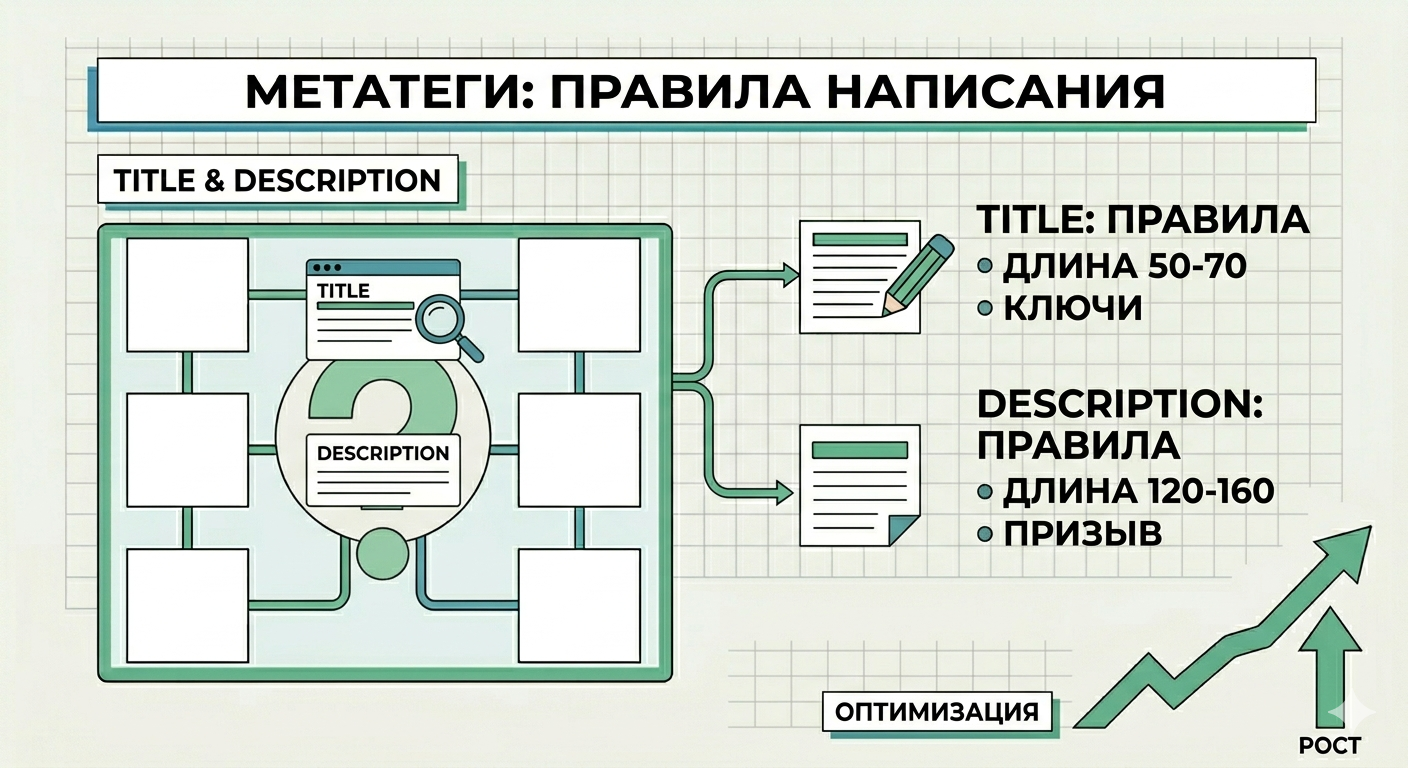
Basic rules for writing Title:
-
length - approximately 50–60 characters
-
the title should be main keyword
-
text should be clear and attractive
-
each page must have a unique Title
Example:
Bad:Home page
Good:SEO website optimization: promotion services and audit
What is a Description meta tag
Description is a short description of the page, which is often shown in search results under the title.
This meta tag does not directly affect rankings, but it does affect click-through rate (CTR).
Basic rules for writing Description:
-
length - 120–160 characters
-
briefly describe the contents of the page
-
use keywords
-
make text attractive to the user
Example:
Learn how to properly optimize your website for search engines. Practical advice on SEO and promotion.
Recommendations for optimizing meta tags
For meta tags to work effectively, you should adhere to several rules:
-
use keywords, but without spam
-
write unique meta tags for each pages
-
make the text clear to the user
-
add call to action (learn, read, receive)
Common mistakes
When creating meta tags, the following mistakes are often made:
-
the same Title on different pages
-
titles are too long
-
missing keywords
-
description that does not correspond to the content of the page
Title and Description meta tags play an important role in SEO promotion of a website. Well-written meta tags help search engines understand your page better and increase the likelihood that a user will click through to your site from search results.