 admin
Common mistakes when writing SEO texts
Writing SEO texts in 2026 is not just “stuffing” a page with keywords. Search algorithms have become smarter, they evaluate the benefit to the reader and the naturalness of the language. However, many authors continue to make mistakes that drag the site down.
Here are the main pitfalls to avoid.
1. Keyword Stuffing
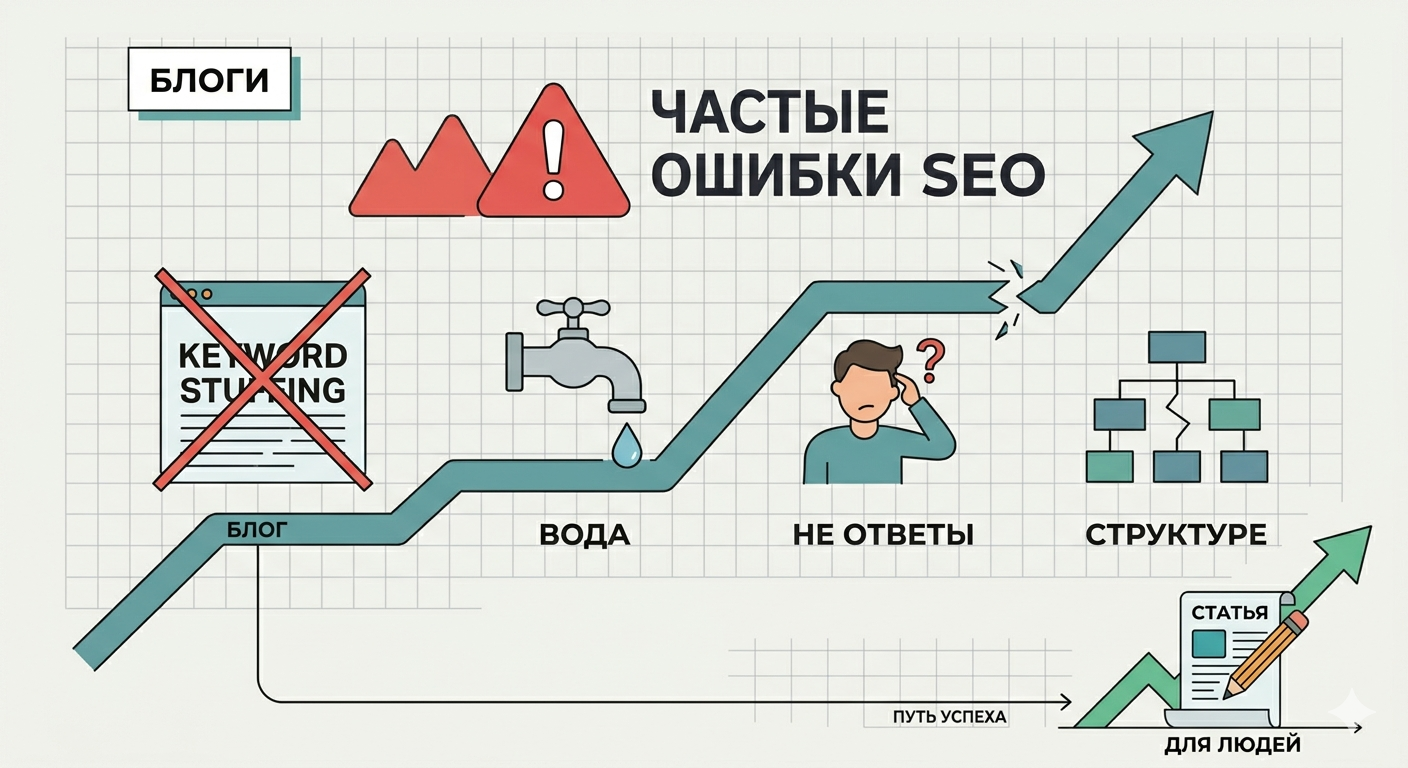
This is “hello” from the 2010s. An attempt to insert the phrase “buy plastic windows inexpensively Moscow” into every second sentence makes the text unreadable.
-
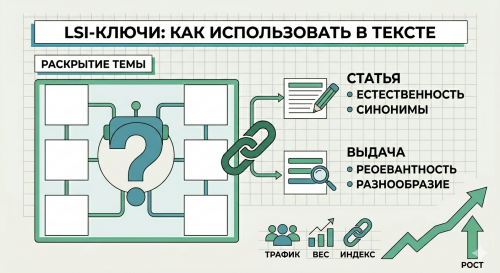
How to: Use LSI phrases (synonyms and thematically related words). Primary key density should be moderate (1-3%). The main thing is that the text sounds natural.
2. Ignoring the user's intent
Often authors write a huge longread for the query “how to tie a tie,” although the user needs short instructions with pictures. If the content of the page does not provide a quick answer to the query, the person will leave, and the “behavioral factors” of the site will deteriorate.
-
How to do it correctly: Before writing, analyze the TOP 5 results for your request. See what content format the search engine prefers (article, checklist, video or product card).
3. Lack of structure and hierarchy of headings
The “sheet” text is a failure. Users scan the page with their eyes, and robots use headers <h1>, <h2>, <h3> to understand the structure.
-
Properly:
-
<h1>- only one per page. -
Use lists (bullet and numbered).
-
Break your text into paragraphs of 3-5 lines.
-
4. Unoptimized meta tags (Title and Description)
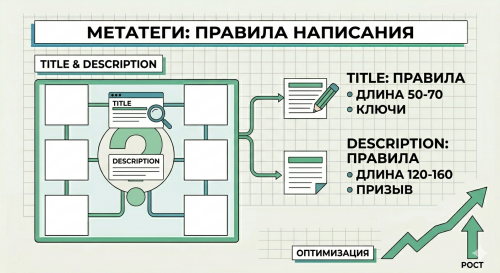
Even perfect text won't get traffic if no one clicks on it in search. Errors here: lack of keys in the Title or too long, uninformative Description.
-
Correct: The title should contain the main key near the beginning. The description should work like an advertisement: clearly describe the benefit and contain a call to action.
5. Low uniqueness and "water"
Copying other people's thoughts or filling the volume with useless phrases like "in the modern world it's no secret..." reduces the value of the page. Algorithms like Google Helpful Content Update strictly filter out useless content.
-
How to do it: Write expertly. Add facts, figures, personal experiences or cases. If a neural network can write an article in 5 seconds without editing, it means there is too much “water” in it.
6. Forgotten Alt Attributes for Images
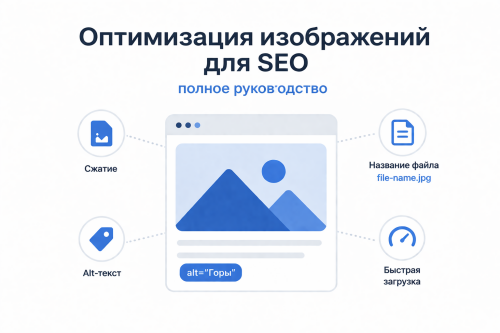
Search engines don't “see” images, they read their description. Ignoring the alt tag means losing traffic from image search.
-
How to do it: Describe what is shown in the photo using keywords, but without fanaticism. For example:
alt="office chair assembly diagram".
The main mistake of modern SEO copywriting is writing for robots, forgetting about people. Write for humans, optimize for machines.