 admin
admin
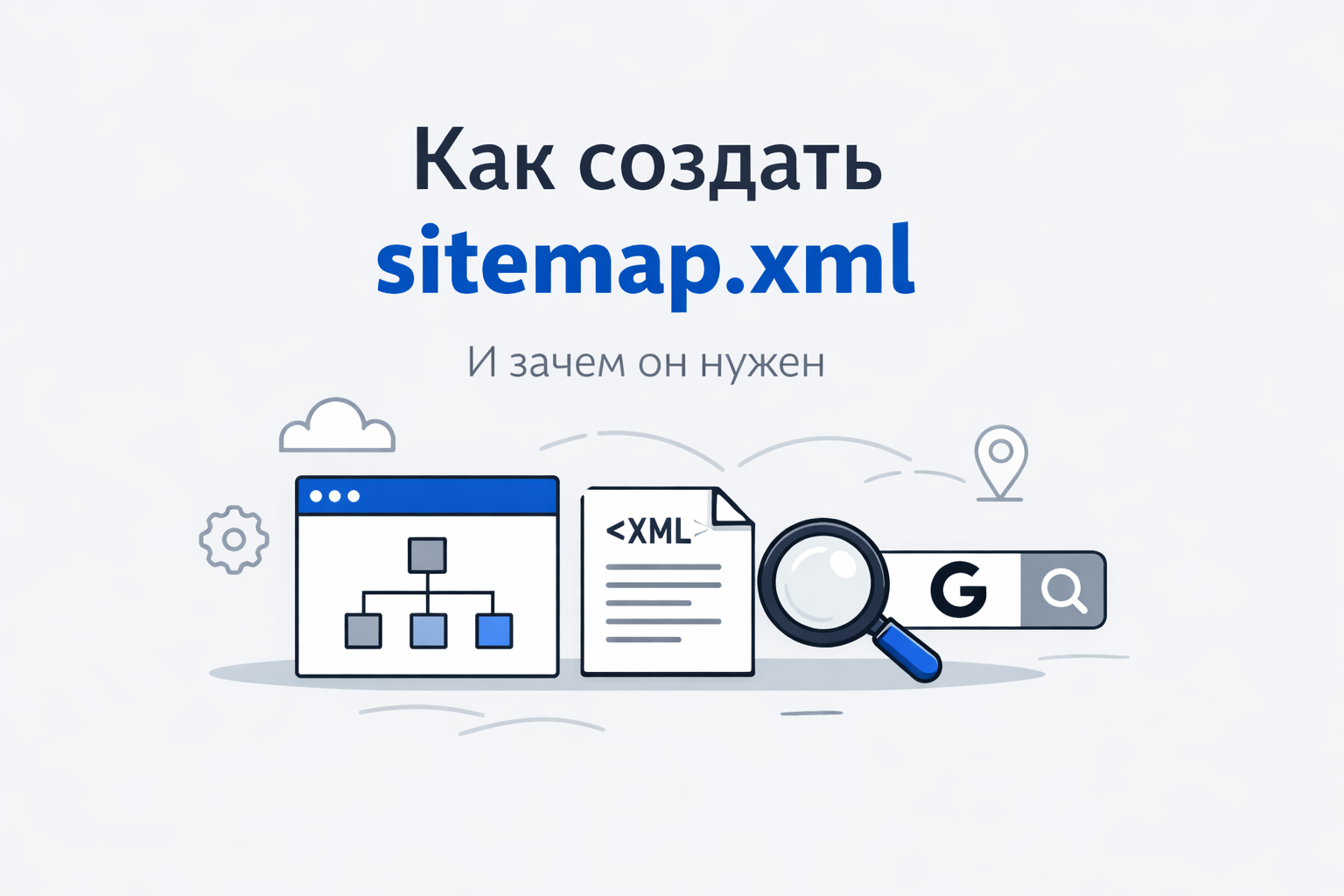
How to create sitemap.xml and why it is needed
What is sitemap.xml
Sitemap.xml is a special file on a website that lists all important pages of your resource. It helps search engines find and index pages faster.
The file is created in XML format and is usually located at:
Search engines like Google and Yandex use this file as a site map. Thanks to it, search bots understand the site structure and find new pages faster.
Why is sitemap.xml needed
1. Speeds up site indexing
When a new page appears on the site, a search bot may not find it immediately. Sitemap informs the search engine that the page exists and needs to be indexed.
This is especially important for:
- new websites
- large online stores
- websites with a large number of pages
2. Helps search bots understand the site structure
In sitemap, you can specify:
- which pages are most important
- when the page was updated
- how often it changes
This helps search engines navigate the site better.
3. Improves SEO
Having a sitemap.xml does not guarantee high rankings, but it helps to:
- index pages faster
- reduce the likelihood of missing pages
- improve the technical SEO of the site
This is especially useful for sites on WordPress, online stores on WooCommerce, and large catalogs.
How sitemap.xml looks
Example of a simple sitemap file:
<urlset xmlns="http://www.sitemaps.org/schemas/sitemap/0.9">
<url>
<loc>https://site.com/</loc>
<lastmod>2026-03-20</lastmod>
<changefreq>weekly</changefreq>
<priority>1.0</priority>
</url>
<url>
<loc>https://site.com/blog</loc>
<lastmod>2026-03-18</lastmod>
<changefreq>monthly</changefreq>
<priority>0.8</priority>
</url>
</urlset>
Main parameters:
- loc — page address
- lastmod — date of last modification
- changefreq — update frequency
- priority — page priority
How to create sitemap.xml
1. Using a WordPress plugin (the easiest way)
If the site runs on WordPress, you can create a sitemap automatically.
Popular plugins:
- Yoast SEO
- Rank Math
- All in One SEO
After installation, the plugin creates the sitemap itself.
It is usually available at:
2. Via online generators
You can use special services:
- XML-Sitemaps
- My Sitemap Generator
You enter the site address, and the service creates a ready-made file.
3. Create manually
If the site is small, you can write the file yourself in XML format.
After creation, you need to:
- upload the file to the server
- place it in the root of the site
- check availability
Example:
How to submit sitemap to search engines
After creation, it is advisable to add the sitemap to the webmaster panels.
For Google
Use the Google Search Console service.
You need to:
- go to the Sitemaps section
- paste the file address
- click Submit
For Yandex
Use Yandex.Webmaster.
It also has a Sitemap Files section where you add the link.
What pages should be added to the sitemap
It is recommended to add:
- site pages
- blog articles
- categories
- online store products
Do not add:
- filter pages
- technical pages
- duplicate pages
Common sitemap errors
The most common errors are:
- broken links
- pages closed from indexing
- too large file (more than 50,000 URLs)
- lack of sitemap updates
Therefore, it is important to check the sitemap periodically.
Sitemap.xml is an important technical file for a website that helps search engines find and index pages faster.
It is especially useful for:
- new websites
- blogs
- online stores
- large projects
The easiest way to create a sitemap is to use a WordPress SEO plugin. This allows you to automatically update the sitemap and keep it up-to-date without manual work.